Cash Flow Analysis
The primary purpose of a statement of cash flows is to provide relevant information about the cash receipts and cash payments of an entity during a period. The information a statement of cash flows provides should help financial report users in part to assess:
- An entity’s ability to generate future net cash flows
- It ability to meet its obligations as they come due
- Its needs for external financing
How to Read a Cash Flow?
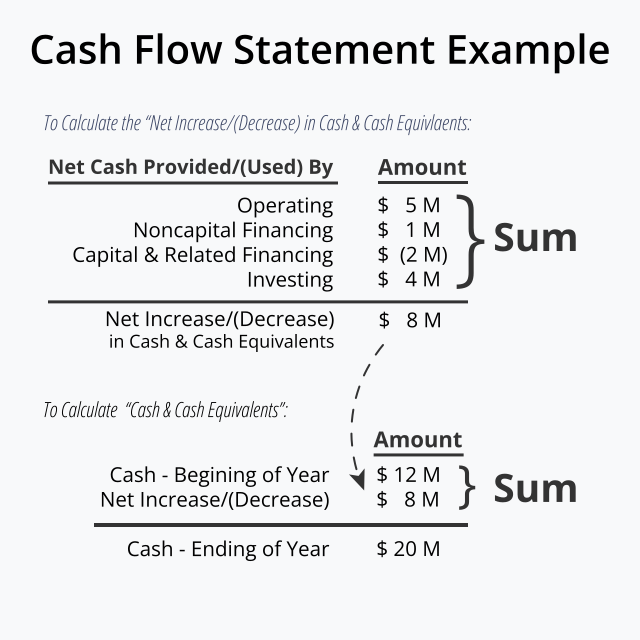
The statement of cash flows is typically divided into four sections, each reflecting different categories of cash activities.
- Operating Activities
- Noncapital Financing Activities
- Capital & Related Financing Activities
- Investing Activities
The Net Increase/(Decrease) in Cash and Cash Equivalents is the sum the net inflow or outflow from each of these four sections. The Beginning Cash and Cash Equivalents plus this "Net Increase (Decrease) In Cash and Cash Equivalents results in Ending Cash and Cash Equivalents, which should agree to the "Cash and Cash Equivalents" line item(s) shown in the Statement of Net Position.
- Inflows - Some examples of receipts for a college and university include tuition and fees paid by students, certain grants and contracts, sales and services from housing, dining, bookstores, athletics, patients, etc.
- Outflows - Some examples of payments for a college and university include salaries and benefits for faculty and staff, operating expenses (utilities, supplies, maintenance), certain scholarships and financial aid, and payments to vendors and suppliers.
This section includes cash flows related to financing activities other than those related to acquire, construct, or improve capital assets (e.g. buildings, land, equipment).
- Inflows - Some examples of receipts for a college and university include state appropriations, gifts and grants, including student financial aid and federal direct loans received for students.
- Outflows - Some examples of payments for a college and university include federal direct loans paid to students.
This section reports cash flows related to the acquisition and disposal of capital assets like land, buildings, and equipment and the financing of those assets.
- Inflows - Some examples of receipts for a college and university include proceeds from the sale of property, plant, and equipment. Grants or donations restricted for capital projects. Proceeds from issuing debt (bonds) to finance construction.
- Outflows - Some examples of payments for a college and university include purchase of land, buildings, and equipment (e.g., constructing a new classroom building). Principal payments on debt (e.g., paying down bonds issued to build a library). Interest payments on debt.
- Inflows - Some examples of receipts for a college and university include proceeds from the sale of investments (stocks, bonds, real estate, etc.). Interest and dividends received on investments.
- Outflows - An example of a payment for a college and university includes the purchase of new investments.
Condensed Cash Flow Statement
A condensed statement of cash flow is a simplified version of a regular cash flow statement.
Operating Activities
This section reflects the receipts or payments of an entity for providing services and producing and delivering goods. Cash flows from operating activities are generally the cash effects of transactions and other events that determine an entity’s operating income or loss.
Noncapital Financing Activities
This section includes cash flows related to financing activities other than those related to acquire, construct, or improve capital assets (e.g. buildings, land, equipment).
Capital and Related Financing Activities
This section reports cash flows related to the acquisition and disposal of capital assets like land, buildings, and equipment and the financing of those assets.
Investing Activities
This section covers cash flows related to the purchase and sale of investments.